
What’s A Bond?
A bond is basically an IOU. You lend your money to a government or company, and in return they promise to pay you interest and eventually give your money back. A bond fund simply holds lots of these IOUs, spreading the risk across many different borrowers.
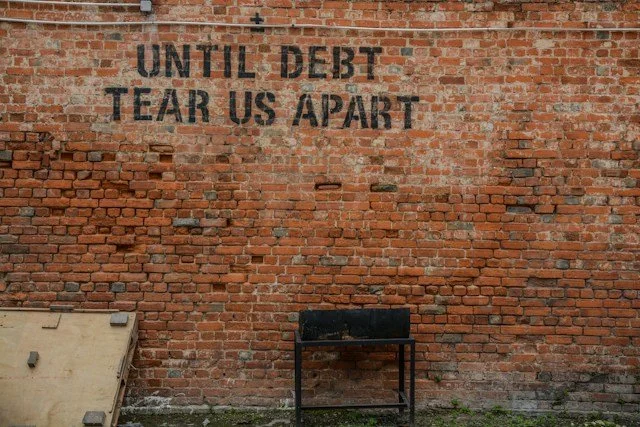
The ‘yield’ on a bond denotes how risky it’s perceived to be (i.e., the chances of the lender getting their money back). Higher ‘yields’ denote a higher perceived risk.
in the news, you’ll have heard that ‘yields’ on government bonds have been going up. That’s because governments across the world have such high borrowings and lenders are feeling slightly skitty about it.
Bigger Picture
If you’ve looked at your investment values recently, you may have noticed bonds have been having a difficult time. That can understandably be concerning. After all, when you see the value of an investment falling, it’s natural to wonder whether something is seriously wrong.

The important thing to remember is that short-term movements in bond markets are a normal part of investing and they don't necessarily change the long-term reasons why bonds are a good thing to have in your portfolio.
So, What’s Happening?
Bond markets around the world have been unsettled recently. In the UK, government bond yields have risen significantly, partly because inflation has proved more persistent than expected and partly because of uncertainty surrounding energy prices and the wider geopolitical situation.
The Bank of England has kept interest rates at 3.75% but has acknowledged that inflation could remain higher for longer. This has pushed investors to reassess where interest rates might be heading next.
There’s also been considerable volatility in global bond markets. In September, government borrowing costs in several major economies reached multi-year highs.
That sounds worrying – but there is another side to the story.
All Bad News?
Higher yields can be good news. It is easy to focus on the fall in bond prices and overlook what’s happening underneath. When bond yields rise, the price of existing bonds generally falls. That's why you can see a temporary fall in the value of a bond fund.

But higher yields also mean new bonds can be bought at more attractive rates. Over time, this can be positive for investors because the income being generated by bonds becomes more attractive. In other words, today's volatility can create better opportunities for the future.
The Bank of England has also recently changed its approach to selling government bonds, with the intention of reducing the potential for disruption to the market.
What Does This Mean For Your Money?
This is where it’s important to step back and look at the bigger picture.
We don't invest in bonds because we expect them to rise every month or every year. They have a different job within a diversified portfolio.

Depending on your individual investment strategy, bonds may provide income, diversification and a relatively defensive element alongside shares and other investments. They can also provide an important source of stability when equity markets are experiencing their own periods of uncertainty.
That doesn't mean bond prices won't fall from time to time. They will. And that is exactly what we are seeing now.
What Am I Doing?
I completely understand why you might be concerned when you see negative numbers on a valuation or the endless sensationalism in the news. I look at things with exactly this in mind. I care about the money my clients have entrusted to me and I don't ignore periods of market uncertainty.

I’m continually monitoring what’s happening but there’s an important difference between monitoring my clients’ investments and reacting to every short-term movement.
Investment markets are constantly responding to new information. Inflation figures change. Interest-rate expectations change. Wars and geopolitical events happen. Government borrowing changes. Investor sentiment changes. Sometimes markets move sharply as a result.
That’s uncomfortable, but it’s not necessarily a reason to change a carefully constructed long-term investment plan.
Keeping Things In Perspective
The current bond market volatility is another reminder that investing is not a straight line upwards. There will be periods when investments perform well and periods when they don't.
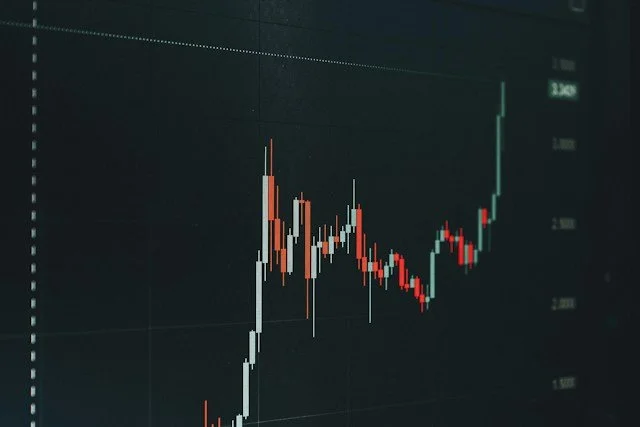
My job is not to predict every movement in the market. My job is to make sure my clients’ investment strategy is appropriate for them, their objectives and their timescale – and then keep it under review.
So, if you are looking at your latest valuation and wondering what’s going on, please don't assume that a short-term fall means your long-term plan has gone wrong.
Markets Are Uncertain By Their Very Nature
This particular period of uncertainty will eventually pass, just as previous periods have. That’s usually the hardest part of investing – but it is also one of the most important.
I hope this helps to reassure you but I’m here if you need me…